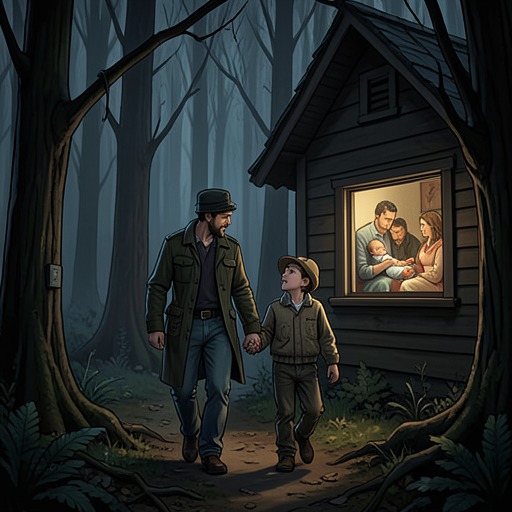
Pinocchio and Geppetto’s father–son relationship
The Adventures of PinocchioPinocchio and Geppetto’s father–son relationship is the story’s central bond of care tested by separation: Geppetto sacrifices for his son, while Pinocchio’s repeated departures keep that care at a distance. Their reunion inside the Shark reverses the pattern. Pinocchio finds his father, tells him the history of his misfortunes, and then leads the escape; by the end, his goodness is associated with happiness renewed in their home.
A bond strained by disobedience
Geppetto’s sacrifice gives the relationship a defining early measure: he sells his coat so Pinocchio can have a schoolbook and go to school, leaving himself shivering at home. Pinocchio later recalls this gift as the starting point of a chain of departures and dangers. Rather than going to school, he runs to the Marionette Theater, where Fire Eater catches him and threatens to burn him; the gold pieces Fire Eater gives him for Geppetto do not reach his father safely, because the Fox and the Cat divert Pinocchio on the way.
The distance between father and son is therefore not simply geographical. In recounting his past, Pinocchio recognizes how often he acted against the schooling and care Geppetto had tried to provide. He remembers being deceived into burying the coins at the Field of Wonders, imprisoned after reporting their theft, and caught in a farmer’s trap after leaving prison. Each episode extends the separation, while his account to Geppetto turns those scattered adventures into a personal confession. Pinocchio asks whether his father has forgiven him, revealing that reunion also means facing the harm and worry accumulated during his absences.
Separation and the search for one another
Their separation is mutual rather than one-sided. Pinocchio tells Geppetto that, after learning the Fairy was dead, he heard from a pigeon that his father had built a boat to search for him in America. Geppetto confirms the account from the other side: he recognized Pinocchio at sea and wanted to reach him, but rough water overturned the boat. The Terrible Shark then swallowed him. The father’s search, which Pinocchio had not witnessed, makes visible the persistence of Geppetto’s care even when the two cannot find each other.
Geppetto has been trapped in the Shark for two years when Pinocchio reaches him. Their reunion begins in an unlikely domestic scene: by candlelight, Geppetto sits at a little table eating live fish. Pinocchio is so overcome that he can scarcely speak before throwing his arms around his father’s neck. Geppetto rubs his eyes and asks whether the figure before him is really his son. The recognition is reciprocal, but Pinocchio’s first response is not merely relief: he promises not to leave Geppetto again and immediately begins telling him how they were separated.
From rescued child to caregiver
The reunion changes who can act for whom. When they discover that leaving the Shark’s stomach will mean entering darkness, Pinocchio urges that they escape without delay. After an initial attempt fails, he takes Geppetto by the hand and guides him back through the monster’s throat. At the final leap, he tells his father to climb onto his back and hold tightly; Pinocchio then carries him into the water and swims. The son who repeatedly left the protection his father tried to provide now assumes responsibility for getting his father to safety.
Their escape does not end with the Shark. Once the Tunny has helped them reach shore, Pinocchio offers Geppetto his arm because the old man is too weak to stand steadily. He proposes that they walk slowly and rest when tired. This practical tenderness contrasts with the earlier pattern of flight and impulsiveness: Pinocchio attends to Geppetto’s physical weakness and sets a pace that takes it into account. Care becomes something enacted through patience and assistance, not only declared in the joy of finding one another.
The relationship’s changed ending
The closing transformation makes their renewed bond visible at home. Pinocchio discovers that he has become a real boy and rushes to ask where his father is. Geppetto is in the next room, looking years younger and working again as a wood carver on a picture frame decorated with flowers, leaves, and animal heads. The change in Geppetto and the return of his work accompany Pinocchio’s own transformation; the ending presents the son’s new life alongside a household restored to activity and happiness.
Geppetto explains that when bad boys become good and kind, they can make their homes happy and new. His explanation links Pinocchio’s moral change to the well-being of the family rather than treating it as a private achievement alone. The discarded wooden puppet, leaning limp against a chair, remains beside the transformed boy as a reminder of what has changed. Across the relationship, separation repeatedly exposes the cost of Pinocchio’s choices, while reunion and care provide the means of repair: the boy who once failed to honor his father’s sacrifice ultimately supports, guides, and returns to him.